Test Your Site
Edit Content

AEO Needs Good Bots—But Your WAF Might Be Blocking the Wrong Ones

AEO Needs Good Bots—But Your WAF Might Be Blocking the Wrong Ones

In 2026, visibility isn’t just about Google rankings anymore, especially for marketing and PR teams. Generative Engine Optimization (GEO) and Answer Engine Optimization (AEO), the practice of optimizing content so AI-powered answer engines (like ChatGPT, Perplexity, Claude) directly cite or summarize it in no-click responses, mean your marketing content, thought-leadership pieces, and brand assets need to be discovered and cited by AI crawlers, LLMs, and retrieval systems.

For marketing and PR managers, this creates a critical dilemma. How do you allow verified “good bots” such as Googlebot, Bingbot, and select legitimate AI agents to access the right public content to drive leads and strengthen brand presence, while keeping malicious scrapers and impersonators firmly out?

Most websites still rely on WAFs or basic bot controls that force binary decisions: allow or block. These tools rely on patterns or IP lists, but they struggle with the grey-zone bots that dominate today’s crawlscape—agents that are neither clearly helpful nor outright malicious. Think ambiguous crawlers, research bots, or emerging AI tools that mimic legitimate behavior but can quickly turn abusive if misconfigured or hijacked.

Block too aggressively and you risk hurting your own AEO visibility and rankings. Allow too freely and competitors can scrape your pricing, clone gated content, or overload your infrastructure. Traditional defenses aren’t built for this kind of ambiguity. Marketing teams need intent-based control—the ability to classify bots by behavior and decide access at the content level. That’s where visitor-level visibility becomes a game-changer.
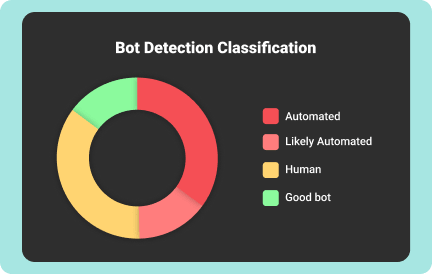
Tools like IntelliFend’s VisitorTag provide powerful behavioral tracking that correlates device fingerprints, cookies, session patterns, and multiple signals to give you a clear, visitor-level view of who is accessing your site and what they are doing. This allows you to accurately determine whether a visitor is a verified search bot, a grey-zone AI agent, or an impersonator.
With that insight, precise, content-aware policies can be applied: full access granted to blog articles, requests throttled on pricing pages, or suspicious automation quietly monitored—all without forcing CAPTCHAs on real users or disrupting legitimate traffic. This way your brand and intellectual property are protected, your UX stays clean, and SEO signals remain unharmed.
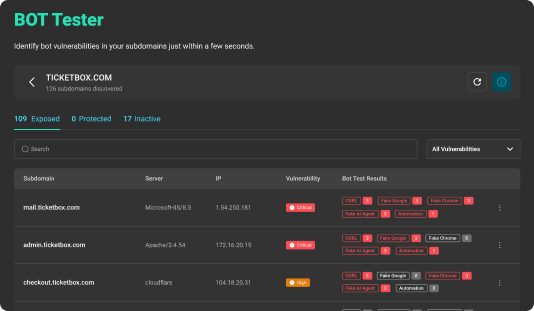
Ready to find out where your site stands? Run our free Bot Tester — we’ll simulate real-world bots (CURL, Fake Chrome, Fake Googlebot, advanced automation) and deliver a personalized Crawl Access Scorecard in as fast as one minute. No commitment, just clarity.

Related Post

Manage Bots With
Speed and Accuracy